Feeling thirsty even after drinking water, waking up several times at night to urinate, or feeling tired throughout the day may seem like ordinary problems. However, when these changes continue without a clear reason, they should not be ignored. These could be early symptoms of diabetes, a condition where blood sugar levels rise more than normal.
These changes can be a reason to check your blood sugar and seek medical advice before more health problems arise.
What Are the Early Symptoms of Diabetes?
Diabetes does not cause the same symptoms in everyone. Some people notice several changes, while others may feel completely normal.
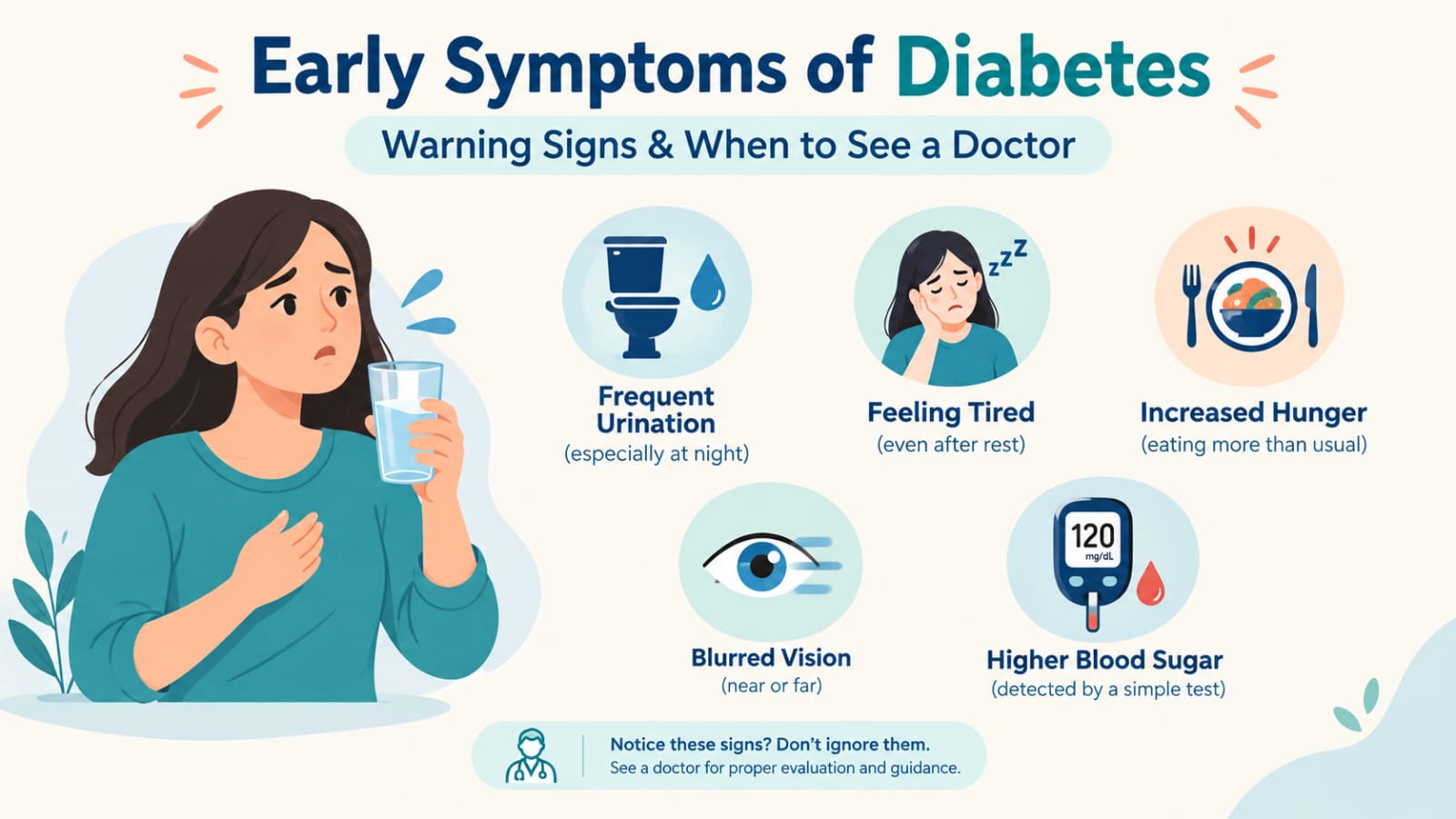
- Frequent urination: You may need to visit the bathroom more often, particularly at night. This happens because the kidneys try to remove excess sugar through urine.
- Increased thirst: Losing more fluid through urination can leave you feeling thirsty throughout the day.
- Unusual hunger: You may feel hungry soon after eating because your body is not using glucose effectively for energy.
- Tiredness: High blood sugar can affect how your body uses energy, leaving you feeling drained even after adequate rest.
- Blurred vision: Changes in blood sugar can affect the fluid balance in your eyes and temporarily make your vision unclear.
- Slow-healing cuts: Small wounds may take longer to heal. Some people also experience repeated skin or urinary tract infections.
- Unexplained weight loss: Can be one of the early symptoms of diabetes, even when your eating habits remain the same. This can be a warning sign, particularly when accompanied by thirst and frequent urination.
When Should You See a Doctor?
Even one persistent symptom is enough to discuss a blood sugar test with your doctor. Arrange a medical consultation if you notice persistent thirst, frequent urination, unexplained weight loss, recurring infections, or unusual tiredness.
A doctor may recommend a fasting blood sugar test or an HbA1c test, which measures your average blood sugar over roughly the past three months. A doctor may also check your blood sugar to understand your condition better. A home glucose meter can help monitor sugar levels, but it cannot confirm a diagnosis on its own.
Seek emergency medical care if symptoms develop rapidly alongside vomiting, abdominal pain, deep or difficult breathing, confusion, or severe weakness. These may indicate a serious diabetes-related emergency.
Who Should Get Tested for Diabetes?
You may need testing even if you feel well. Your risk may be higher if you:
- Have a parent or sibling with diabetes.
- Are overweight or physically inactive.
- Have previously been diagnosed with high blood sugar.
- Have had diabetes during pregnancy.
- Have high blood pressure or other metabolic risk factors.
Can Early Testing Make a Difference?
Yes. Finding high blood sugar early gives you an opportunity to understand your condition and start appropriate care.Your doctor may recommend some changes to your eating habits or regular physical activity after checking your results.
If you have noticed possible early symptoms of diabetes, do not try to confirm the condition through symptoms alone. A timely diabetes check-up can help identify the cause and guide the next steps. Even if symptoms are not noticeable, people at increased risk should discuss screening with their doctor.
Conclusion
Unusual changes in thirst, urination, weight, or energy levels deserve attention when they persist. Ratnaraj Hospital offers healthcare services to support patients with their medical concerns. Consult a doctor if you are experiencing possible diabetes symptoms or need guidance on blood sugar testing.